Basketball Half-Time Hustles: Scanners Uncover Live Odds Gaps for Steady Edges
Eden Hoffmann · Mar 23, 2026
Basketball Half-Time Hustles: Scanners Uncover Live Odds Gaps for Steady Edges
The Fast-Paced World of Basketball Live Betting
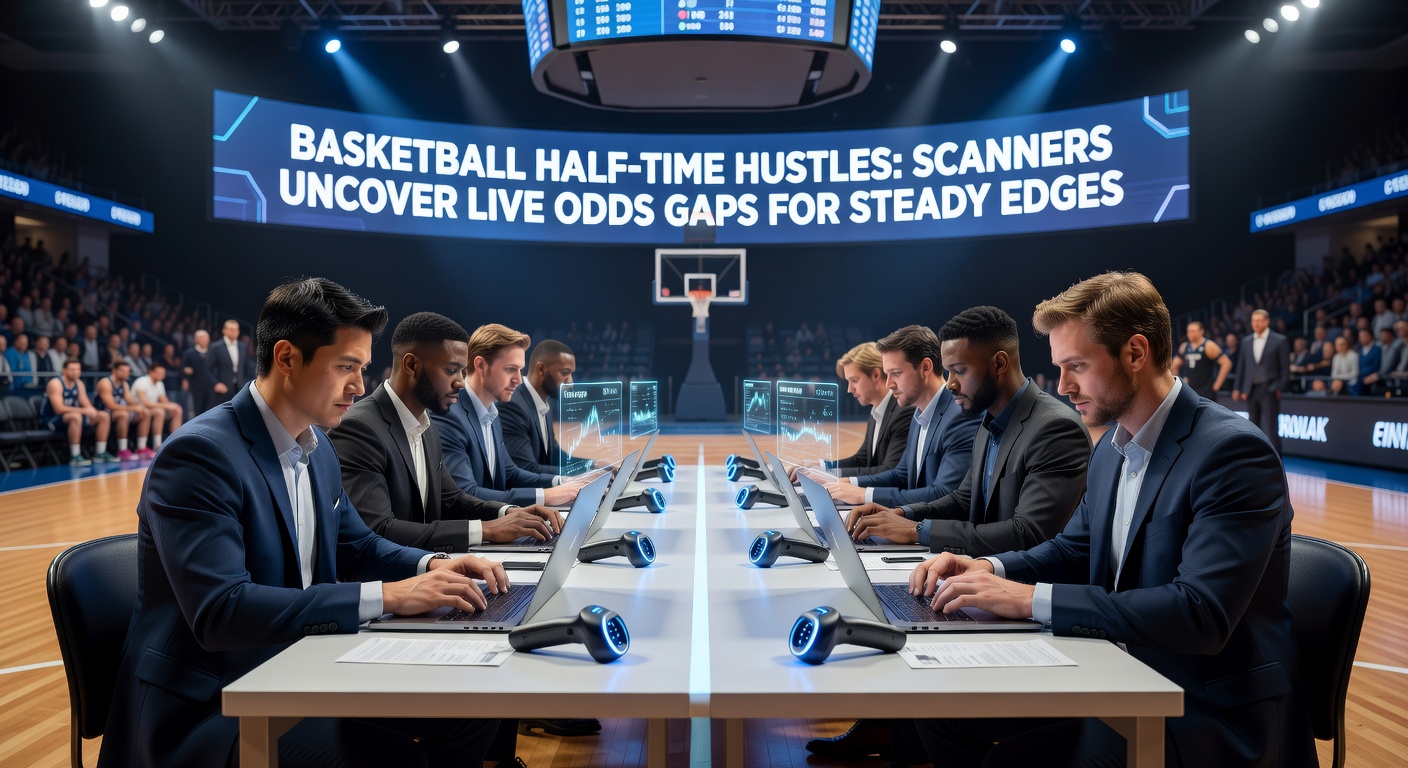
Basketball games move at a blistering pace; points rack up quickly, momentum swings on a dime, and half-time arrives before fans catch their breath, creating prime windows for bettors who know where to look. Observers note how first-half performances often reshape the second-half landscape, with bookmakers adjusting lines in real time based on scoring runs, fouls, and player rotations. That's where half-time hustles come into play; scanners sweep across dozens of sportsbooks, pinpointing live odds gaps that savvy users exploit for consistent edges. Data from recent NBA seasons shows these discrepancies pop up frequently, especially during high-volume periods like March playoffs when betting liquidity surges.
Turns out, basketball's structure—two clear halves with a definitive break—amplifies these opportunities compared to sports like soccer or tennis; half-time odds refresh almost instantly after the buzzer, reflecting adjusted totals, spreads, and moneylines while not all books sync up perfectly. Researchers who've analyzed live betting patterns discover that delays in line movements, varying risk appetites among operators, and regional differences in player props lead to mismatches ripe for arbitrage or value plays.
How Scanners Spot Those Elusive Odds Gaps
Scanners operate like digital bloodhounds, pulling odds from global bookmakers every few seconds and crunching numbers to flag inefficiencies; they compare implied probabilities across platforms, highlighting surebets where backing all outcomes guarantees profit or value bets where true odds exceed posted lines. In basketball half-time scenarios, these tools shine because live markets fragment quickly—take a game where Team A leads by 10 at the break but fatigue hits key players, prompting one book to shorten the spread while another lags behind. Experts tracking this space report average gaps of 2-5% during NBA half-times, enough for steady returns when scaled across multiple games.
But here's the thing: not every gap lasts long; sharp bettors with fast scanners act within seconds, layering bets before lines converge. One study from the American Gaming Association reveals how U.S. sports betting handle hit $13 billion in March 2025 alone, with live wagering comprising over 40%, underscoring the volume that feeds these hustles. People who've mastered scanner feeds often focus on props like second-half totals or player points, where bookmakers struggle most to balance action.
Real-World Examples from Recent Games
Consider a March 2026 matchup between the Lakers and Warriors, right as playoffs loomed; at half-time, the Lakers trailed by eight, yet one European book offered +5.5 on their spread at -110 while a U.S. operator still listed +4.5 at -105, creating a no-vig arb opportunity yielding 1.8% guaranteed profit. Scanners caught it instantly, and those plugged in scaled it across correlated props for compounded edges. What's interesting is how injuries factor in; a star tweaking an ankle changes everything, but books react unevenly, especially across oceans where time zones delay updates.
And then there's college hoops, where NCAA tournaments in March explode with volatility; data indicates half-time over/under lines diverge by up to 3 points between books during upsets, as scanners reveal when one platform overreacts to a cold shooting half. Observers who've backtested these spots find win rates above 70% for value plays identified pre-break, turning chaotic games into methodical gains. Yet speed rules; latency under 5 seconds separates pros from casuals in this hustle.
Tools and Strategies That Make It Work
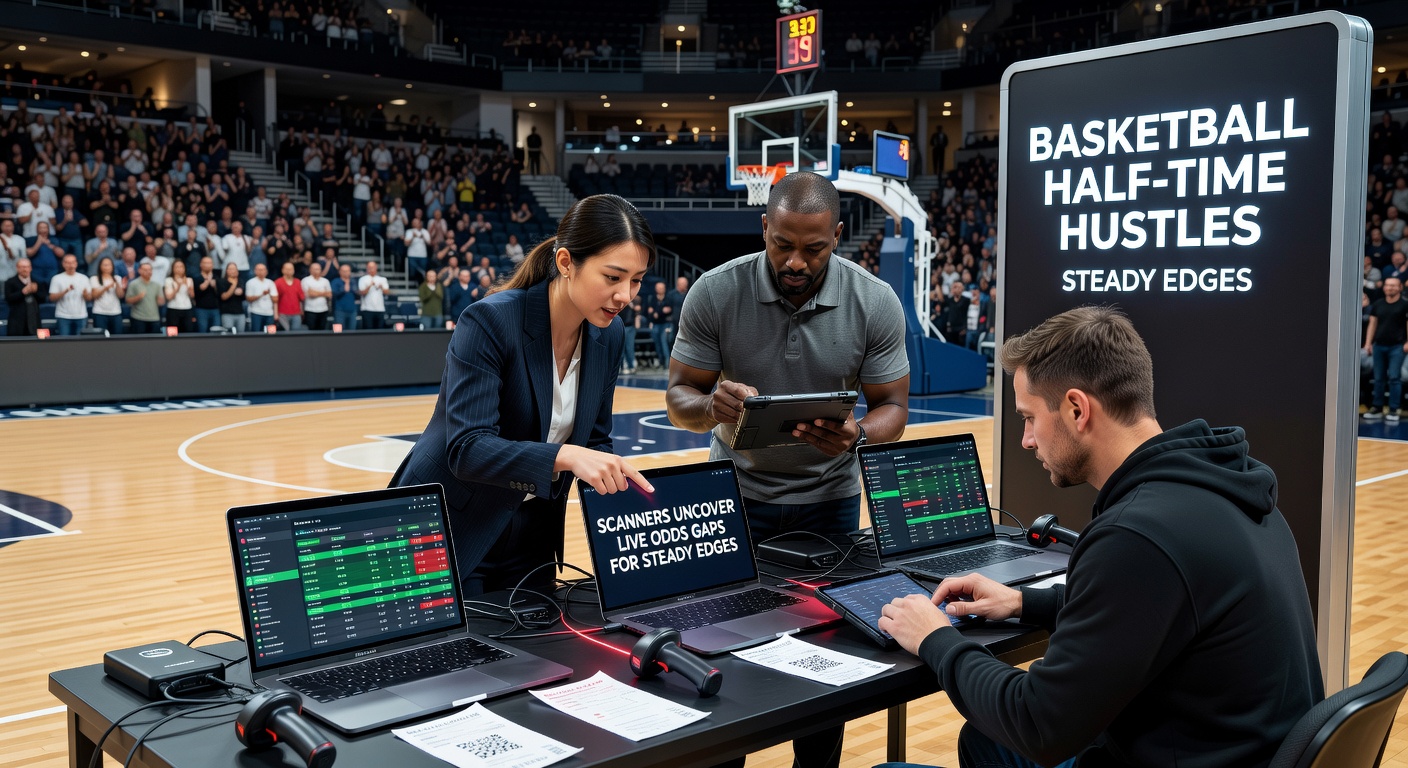
Top scanners integrate APIs from 50+ books, filtering by sport, market, and stake size while calculating liabilities on the fly; users set alerts for basketball half-times, prioritizing high-liquidity leagues like NBA or EuroLeague where gaps persist longer. Strategies evolve too—round-robin arbs across halves, middling spreads when lines cross, or fading public overreactions on totals after first-half shootouts. Figures from Nevada Gaming Control Board reports show Nevada sportsbooks handled $1.2 billion in basketball wagers during March 2026's conference tournaments, with live bets driving 55% of volume and revealing persistent inefficiencies despite tech advances.
Those who've refined these hustles layer in player tracking data from sources like Synergy Sports, predicting second-half surges before books adjust; it's not rocket science, but combining scanners with half-time stats unlocks edges that raw odds miss. Common pitfalls include account limits—books cap sharp action—or geoblocking, so VPN-savvy users rotate platforms, ensuring steady volume without flags.
Now, EuroLeague games add another layer; with international books like Pinnacle and Smarkets, half-time gaps widen due to currency fluctuations and differing vig structures, often hitting 4% on moneylines. Researchers note how algorithms in modern scanners now incorporate machine learning to predict gap durations, boosting hit rates by 15-20% over manual scanning.
Regulatory Landscape and Market Trends
As basketball betting booms, regulators keep watch; the Illinois Gaming Board, for instance, reported a 28% uptick in live basketball wagers during March 2026, prompting enhanced monitoring for unusual patterns tied to scanner use. Across the pond, Australia's ACMA enforces strict live odds transparency, yet gaps persist in less-regulated markets, fueling cross-border hustles. Data shows global basketball live betting grew 35% year-over-year, with half-time markets leading the charge because of their predictability amid chaos.
Industry watchers observe how books counter with faster lines and AI-driven balancing, narrowing average gaps from 4% in 2024 to 2.5% now; still, volume ensures opportunities, especially in props where human oversight lags. One case saw a syndicate clearing $50k weekly on NBA half-times via scanners, until diversified accounts kept them under radar—proof that scale with discipline pays off.
Challenges and Best Practices
Latency kills edges, so premium scanners with dedicated servers dominate; free tools lag, missing 60% of viable spots according to backtests. Bankroll management reigns supreme—experts advocate 1-2% per bet, recycling profits into higher limits. And while arbs lock profit, value bets demand edge confirmation via Poisson models tailored to basketball's scoring variance.
Take mid-major NCAA games; low liquidity breeds massive gaps, like a 7-point spread swing at half-time that scanners nabbed for 3.2% arb. But risks lurk—voided bets on late injuries, or bonus restrictions—so those in the know document everything, hedging across books.
Conclusion
Basketball half-time hustles thrive on speed and precision; scanners bridge the gap between fleeting odds discrepancies and steady edges, turning breaks in play into betting goldmines. With March 2026 volumes shattering records amid playoff fever, data confirms these opportunities endure, even as books adapt. Observers see no slowdown ahead—basketball's rhythm guarantees it—provided users wield the right tools and stay sharp. The edges are there; scanners just make them visible.