Cross-Border Betting Disparities: Scanning Software's Role in Identifying Global Odds Gaps
Ines Long · Jul 28, 2026
Cross-Border Betting Disparities: Scanning Software's Role in Identifying Global Odds Gaps
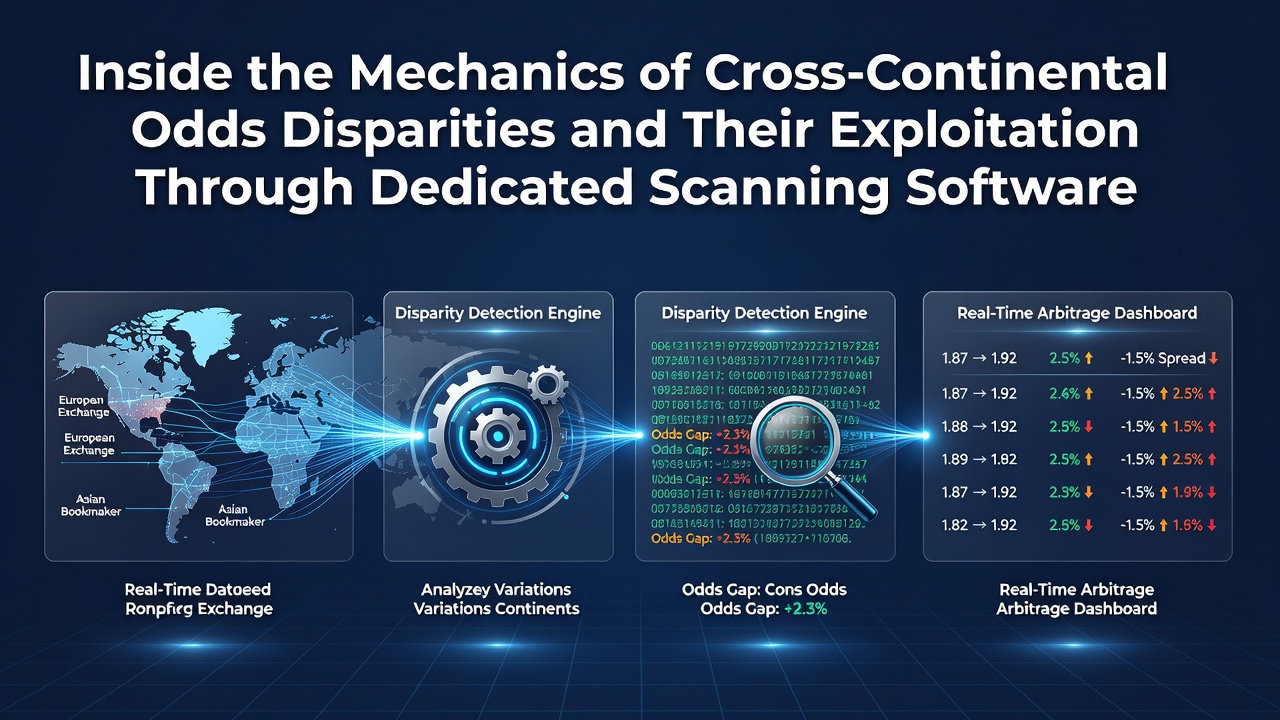
Odds on the same sporting event often diverge sharply when bookmakers operate under different regulatory frameworks, local market preferences, and currency fluctuations across continents, which creates measurable price gaps that dedicated scanning software monitors continuously.
Regional Factors Driving Odds Variations
Bookmakers in Asia, Europe, North America, and Australia each price events according to regional betting volumes, tax structures, and consumer demand patterns, while a soccer match between European clubs might carry tighter margins in London markets yet wider spreads in Sydney or Las Vegas because of differing risk appetites and liquidity levels. Currency exchange rates compound these differences, since a euro-denominated line from a German operator can shift relative value against an Australian dollar equivalent within minutes when forex markets move, and scanning tools track these movements by pulling real-time feeds from dozens of jurisdictions simultaneously.
Data collected by industry monitoring services shows that liquidity shortages in smaller markets produce larger discrepancies than high-volume exchanges, whereas major European events generate smaller gaps because competition among operators keeps prices aligned. Observers note that political events or sudden roster changes amplify the effect when one continent's bookmakers react faster than others, and the resulting lag opens brief windows for cross-continental comparison.
How Dedicated Scanning Software Operates
Scanning platforms connect through APIs to multiple international betting sites, pull current odds into centralized databases, and apply mathematical models that calculate implied probabilities across all available lines, and the software flags any combination where the sum of implied probabilities falls below 100 percent, indicating a potential arbitrage opportunity. These tools update every few seconds during live events because volatility increases dramatically once play begins, while pre-match scans run on scheduled intervals that capture overnight line movements driven by Asian or American market activity.
Advanced systems incorporate historical volatility data and liquidity indicators so they can rank opportunities by expected duration and size, and operators of such platforms report that cross-continental scans routinely surface opportunities involving Australian rugby league, North American basketball, and European soccer within the same session because time zone differences keep at least one major market active at all hours.
Practical Exploitation and Market Responses
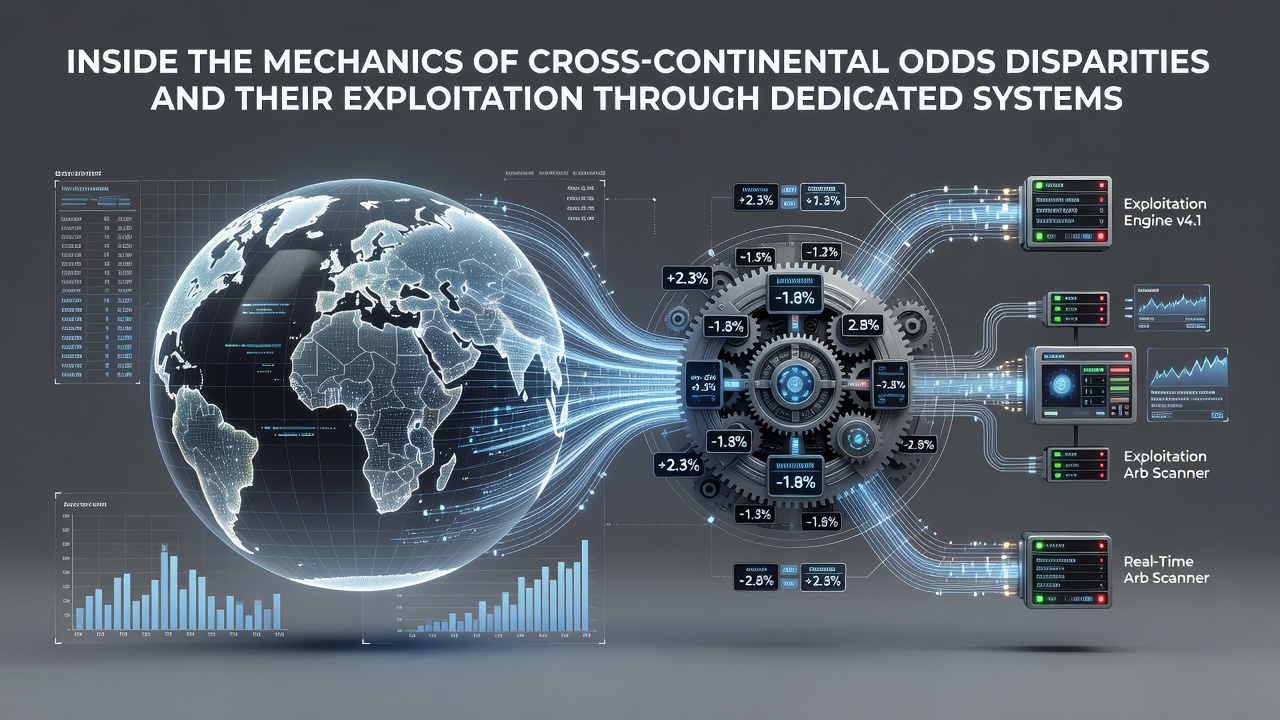
Users who deploy scanning software typically maintain accounts across several continents, fund them in local currencies to avoid repeated conversion fees, and place offsetting bets when the software identifies a qualifying discrepancy, and the process requires precise timing because bookmakers adjust lines once they detect unbalanced action. One documented pattern involves Canadian operators posting different totals on NHL games compared with Australian bookmakers who follow overnight European trading, and scanners capture these gaps before the North American market opens and prices converge.
Bookmakers have responded by limiting stakes from identified arbitrage accounts and by harmonizing certain high-traffic lines with competitors in other regions, yet gaps persist in lower-profile competitions where monitoring resources remain limited. Research from academic centers tracking betting market efficiency indicates that automation has narrowed average discrepancies over time, although sudden news events still generate temporary mispricings that software can exploit faster than manual monitoring allows.
Regulatory Context Across Jurisdictions
Different licensing regimes impose varying requirements on odds transparency and customer fund segregation, which indirectly influences how quickly operators can move lines when cross-border information arrives, and regulators in Australia and Canada have published guidance requiring operators to maintain records of pricing decisions that scanning activity sometimes highlights. Industry associations such as the International Betting Integrity Association track suspicious betting patterns that may stem from coordinated arbitrage across multiple platforms, while data from the Australian Gambling Research Centre shows rising interest in automated tools among both recreational and professional bettors during 2025 and into July 2026.
Conclusion
Cross-continental odds disparities arise from structural differences in local markets, regulations, and liquidity, and dedicated scanning software provides the technical means to detect and act on those gaps within the narrow time windows they remain available. Market participants continue to refine both the detection algorithms and the defensive measures operators employ, which keeps the overall system in constant evolution as new jurisdictions enter the regulated space and technology improves data connectivity across borders.