Currency Fluctuations in Cross-Border Arbitrage: Calculating Surebets Across Multiple Currencies
Gisela Krause · Jul 7, 2026
Currency Fluctuations in Cross-Border Arbitrage: Calculating Surebets Across Multiple Currencies
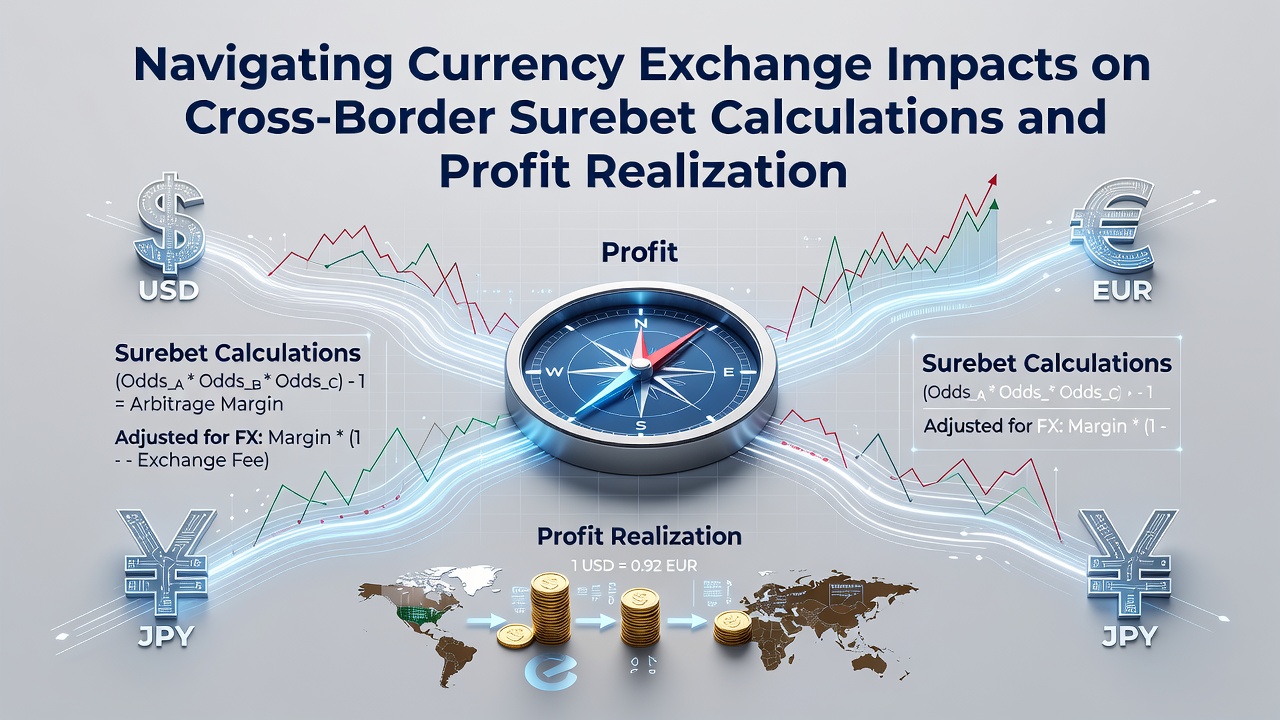
Arbitrage opportunities in betting markets often span international operators where odds appear in different currencies, and exchange rate movements directly alter the final locked profit once all stakes convert back to a single reference currency. Observers note that even small shifts in major pairs like EUR/USD or GBP/AUD can compress or expand margins that scanners initially flag as risk-free. Those who track live odds across borders must therefore fold real-time forex data into every calculation rather than treating currency conversion as a static step performed after bets close.
Core Mechanics of Multi-Currency Surebet Detection
Scanners pull decimal odds from platforms operating under different licensing regimes and immediately convert them using the prevailing interbank rate plus any spread charged by payment processors. Researchers at several quantitative finance programs have shown that failing to refresh the rate between the moment an opportunity appears and the moment stakes are placed can turn a projected 1.8 percent edge into a loss once settlement occurs. Data from the Bank for International Settlements indicates average daily volatility in G10 currency pairs reached 0.6 percent during the first half of 2026, enough to erase thin arbitrage margins when left unhedged.
Impact on Profit Realization Timing
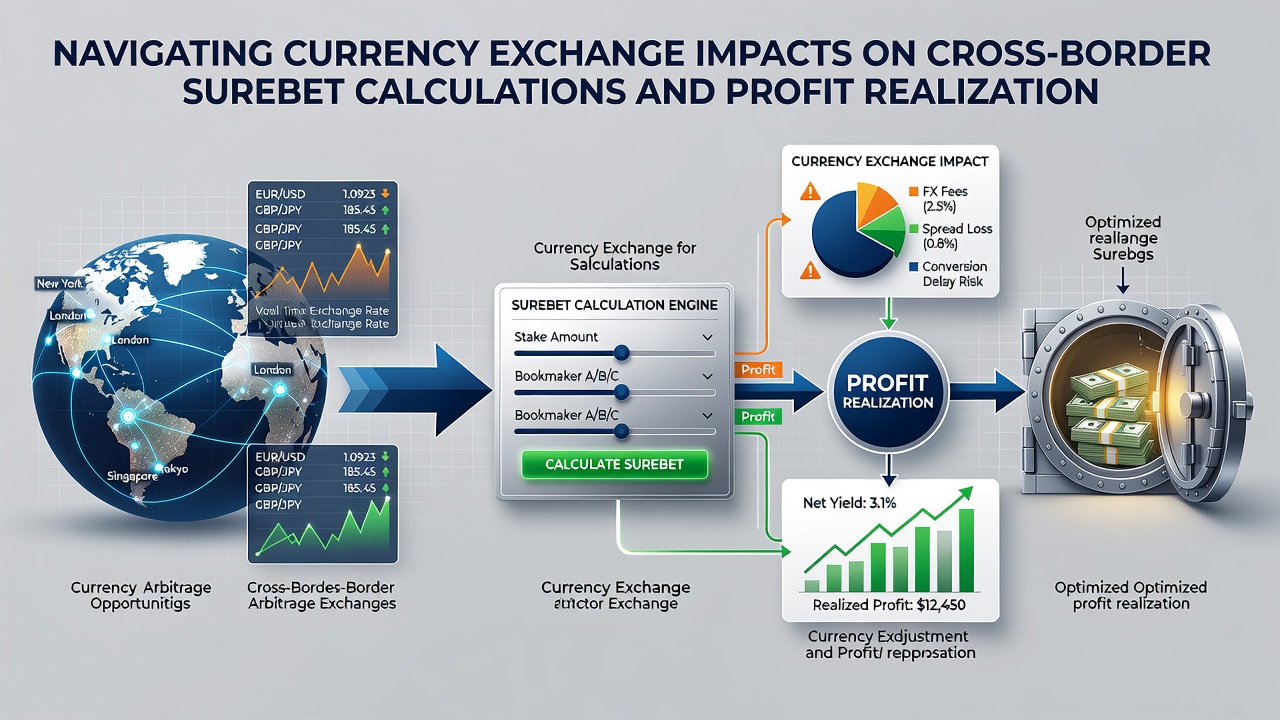
Settlement windows differ by operator and jurisdiction, so the interval between placing the first leg and receiving the last payout can stretch across several trading sessions. During that period the reference currency may strengthen or weaken against the currencies in which winnings arrive. One documented case in early 2026 involved a three-way tennis surebet booked across European and Australian platforms where the AUD strengthened 0.9 percent against the EUR between placement and payout, trimming the realized margin from 2.1 percent to 1.2 percent after conversion. Hedging tools such as forward contracts or same-day currency swaps allow operators and serious bettors to lock the exchange rate at the time of stake placement, preserving the scanner-identified edge regardless of subsequent spot movements.
Practical Calculation Adjustments
Updated formulas now incorporate a currency risk factor derived from implied volatility surfaces published by major dealing banks. The adjusted profit percentage becomes the original scanner output minus the expected slippage from rate movement over the settlement horizon plus any cost of the hedge instrument. Academic papers examining high-frequency betting data demonstrate that incorporating at-the-money options prices for the relevant currency pair improves forecast accuracy by roughly 40 percent compared with using simple historical volatility. Payment rails add another layer because many e-wallets apply their own mid-market or retail spreads that can differ by several basis points from the interbank quote used by scanners.
Regional Regulatory Context in Mid-2026
European operators licensed under the Malta Gaming Authority must disclose currency conversion policies in their terms, yet those disclosures rarely extend to live rate sources or hedging availability. Meanwhile the Australian Transaction Reports and Analysis Centre requires reporting of large cross-border transfers, which can delay receipt of winnings and extend the period during which exchange risk remains open. Bettors operating across these jurisdictions therefore coordinate settlement timing with currency market hours to minimize exposure windows.
Technology and Automation Trends
Leading arbitrage platforms now embed API connections to forex liquidity providers so that every odds refresh carries an associated conversion rate and a one-click hedge quote. Observers tracking adoption rates report that roughly 35 percent of serious cross-border users activated automated hedging during the second quarter of 2026. The remaining participants continue to manage exposure manually, accepting residual basis risk between the scanner quote and the actual execution rate obtained from their broker.
Conclusion
Currency movements represent a measurable variable that must be quantified at the same priority as odds discrepancies when constructing cross-border surebets. Integrating live forex feeds, settlement-time hedging instruments, and region-specific transfer rules allows participants to convert scanner-identified edges into realized profits with greater consistency. Continued refinement of these calculation layers tracks broader developments in both betting technology and global currency markets through the remainder of 2026.