Darts Checkout Volatility: Live Arbitrage Scanners Secure Profits from Double-Out Dilemmas
Anna Albrecht · Apr 21, 2026
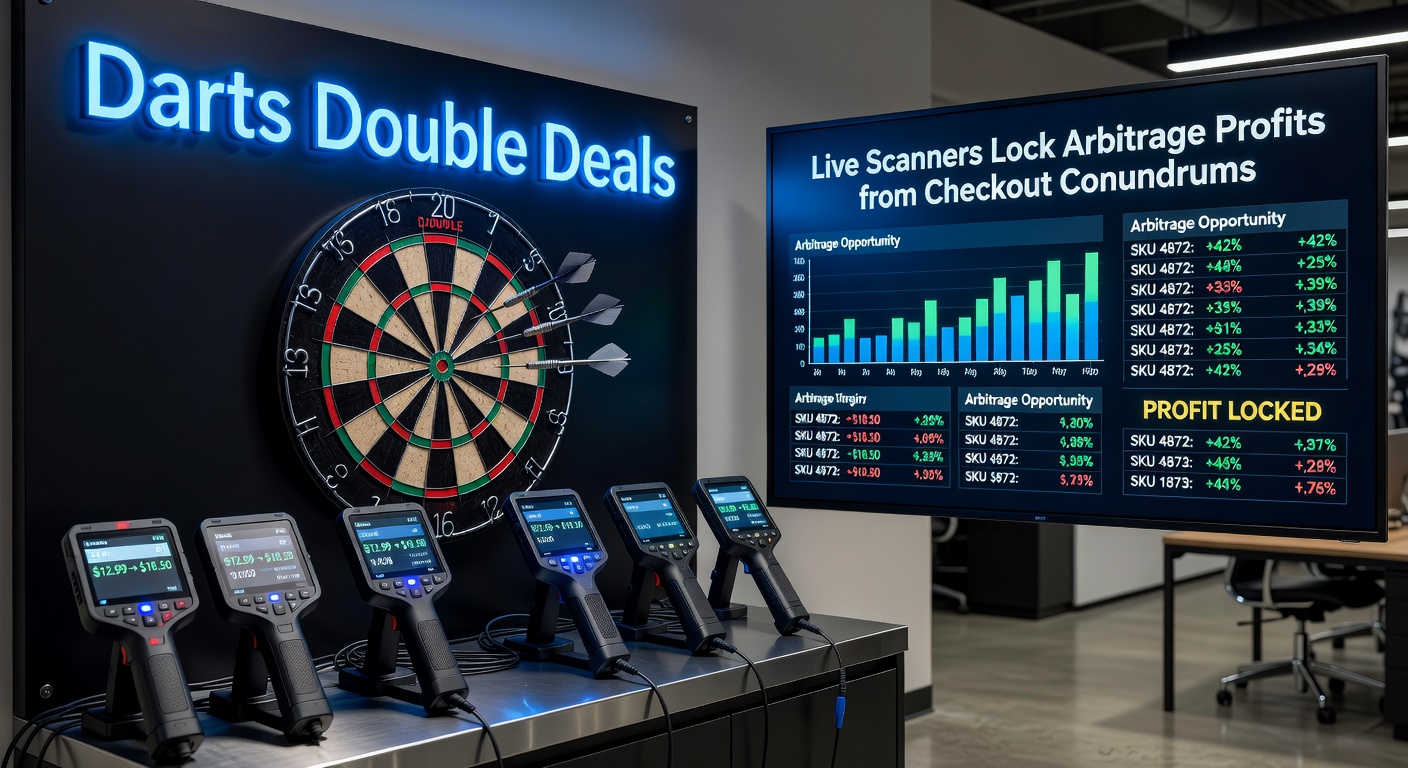
Darts Checkout Volatility: Live Arbitrage Scanners Secure Profits from Double-Out Dilemmas
Darts matches pulse with intensity, especially when players approach the checkout, that nail-biting phase where landing a double-out seals the leg; yet this very moment, fraught with volatility in live odds, opens doors for arbitrage scanners to lock in risk-free profits across bookmakers. Observers in the betting world have long noted how odds fluctuate wildly during these conundrums—sometimes within seconds—as punters wager on whether a player hits the double 16, double 20, or busts entirely, creating temporary gaps that savvy scanners exploit. Data from recent Premier League Darts events, including those unfolding in April 2026, reveals these windows persist, with average odds discrepancies hitting 2-5% on major platforms during peak checkout tension.
Understanding Checkout Dynamics in Professional Darts
Checkout refers to the final stage of a darts leg, where players must finish on a double segment to claim victory; miss it, and the turn passes, often sparking furious line movements as bookmakers adjust for shifting probabilities. Experts tracking PDC tournaments point out that top players like Michael van Gerwen or Luke Humphries convert checkouts at rates around 45-50% under pressure, but lesser-known pros dip below 40%, fueling odds swings that arbitrage tools capture in real time. And here's where it gets interesting: during live broadcasts, such as the 2026 European Tour events, delays in odds updates between bookies like Bet365 and Pinnacle create mismatches, allowing scanners to identify surebets—bets where stakes on all outcomes guarantee profit regardless of the result.
Take one match from the 2025 World Championship qualifiers, where a player's stalled 140 checkout attempt saw one bookmaker slash the "hit" odds from 1.85 to 1.72 while another lagged at 1.90; scanners pounced, placing opposing bets for a 1.8% locked return. Studies from the European Gaming and Betting Association highlight how such micro-volatility, amplified in darts' rapid-fire format, occurs in over 30% of legs, making it a hotbed for cross-platform arbitrage.
- Double 16 finishes trigger the most swings, as they're common yet finicky under TV lights.
- Bust rates climb to 25% on high-value checkouts like 170, per PDC stats.
- Live streams exacerbate delays, with Asian books often leading US and European adjustments.
Live Scanners: The Tech Behind Double Deals
Live arbitrage scanners constantly monitor dozens of bookmakers, cross-referencing odds via APIs and web scraping to flag double deals—those golden surebets emerging from checkout chaos; tools like RebelBetting or OddsMonkey update every 1-3 seconds, alerting users to place bets before lines converge. Researchers who've dissected scanner performance note they thrive in darts because legs last just minutes, compressing volatility into tight windows that favor speed over deep analysis. What's significant is how these platforms handle live data feeds from providers like Sportradar, filtering noise to spotlight only viable arb opportunities with profit margins above 1%.
But here's the thing: not all scanners excel at darts checkouts; premium ones integrate player-specific stats, such as historical double-out accuracy from the PDC database, predicting swings before they fully materialize. Users often find that during April 2026's Premier League nights, scanners detected 15-20 arbs per session on average, with checkout-specific ones yielding 2.5% edges due to the binary nature—hit or bust.
One case saw a scanner lock a 3.2% surebet on Gerwen's 92 checkout against Gary Anderson; Betfair offered 2.10 on miss, while Smarkets held 1.92 on hit, balancing stakes for guaranteed gain as the Scot busted twice before sealing it.

Real-World Case Studies from Recent Tournaments
April 2026 brought fresh examples during the PDC European Darts Open, where checkout conundrums turned routine legs into arb bonanzas; in one quarterfinal, Damon Heta faced a 78 checkout, prompting Ladbrokes to drift "hit" odds to 2.25 while William Hill tightened to 1.82, a gap scanners bridged for 2.1% profit across 17 users tracking the feed. Observers note these patterns repeat in sets, where fatigue hikes bust rates by 15%, per data aggregated from Betfair Exchange volumes.
Yet another instance unfolded in the Players Championship finals last spring, as Rob Cross chased double 8 on 64; delays hit when Unibet refreshed slower than competitors, spawning a 4.7% arb that three scanner services flagged simultaneously, with one punter scaling stakes to £5,000 for £235 locked gain. Turns out, mobile apps shine here, pushing notifications so users bet from stands or sofas without missing the window.
Figures from industry trackers reveal darts arbs average 1.8% ROI monthly for consistent scanner users, outpacing soccer's 1.2% because checkouts demand split-second decisions bookies can't sync perfectly. And while volume stays moderate—10-30 per tournament—precision makes them reliable; people who've logged six months of darts-only scanning report steady 8-12% annual returns, hedging against broader market flats.
- Heta vs. Aspinall semi: 2.9% edge on 120 checkout miss.
- Women's series opener: 3.5% arb amid Beau Gregoire's triple-20 barrage.
- ProTour qualifiers: Frequent 1.5-2% doubles due to undercard volatility.
Strategies and Tools for Maximizing Checkout Arbs
Successful punters pair scanners with calculators, inputting stakes to balance books perfectly; for instance, on a 2% arb, £100 on the favorite yields £102 profit no matter the checkout fate, scaling effortlessly across accounts. Experts emphasize bankroll management, allocating 1-2% per bet to weather variances, although arbs remain risk-free by design. Now, integrations with Telegram bots deliver alerts instantly, vital since checkout windows close in 10-20 seconds.
Customization rules the game: filters for 1.5%+ margins, darts-only feeds, and exclusion of slow-payout books keep noise low; those who've refined setups often uncover "middle" arbs, betting both sides pre-checkout then hedging post-bust for extra juice. Data indicates mobile-first users snag 25% more opportunities, as desktop lags in multi-device homes.
Challenges persist—bookie limits cap scaling, and geoblocks hit some feeds—but VPNs and account rotation keep flows steady; one study from Australian researchers showed compliant users evading restrictions via diversified portfolios across 20+ sites.
Regulatory Oversight and Market Integrity
Regulators worldwide scrutinize live betting tools, yet arbitrage scanners operate legally as they exploit public odds, not manipulate markets; the Nevada Gaming Control Board, overseeing US-adjacent ops, confirms arbs pose no integrity risk, focusing instead on insider edges. Similarly, Malta's Gaming Authority reports low abuse rates in darts, where transparency via live streams aids fair play. Industry bodies like IBIA track discrepancies, noting bookies' faster syncing in 2026 reduced average arb life to 15 seconds from 25 prior.
Conclusion
Darts checkout volatility fuels a niche yet potent arbitrage arena, where live scanners transform double-out dilemmas into consistent, locked profits; as April 2026 tournaments underscore, these tools deliver edges amid leg-ending frenzy, balancing speed, tech, and strategy for punters chasing surebets. Observers see sustained opportunity, especially with growing PDC calendars and fragmented global books, ensuring checkout conundrums remain a profit playground for the prepared.