Inside the Algorithms: How Surebet Detection Software Processes Global Bookmaker Data Streams for Edge Detection
Ines Long · Aug 18, 2026
Inside the Algorithms: How Surebet Detection Software Processes Global Bookmaker Data Streams for Edge Detection
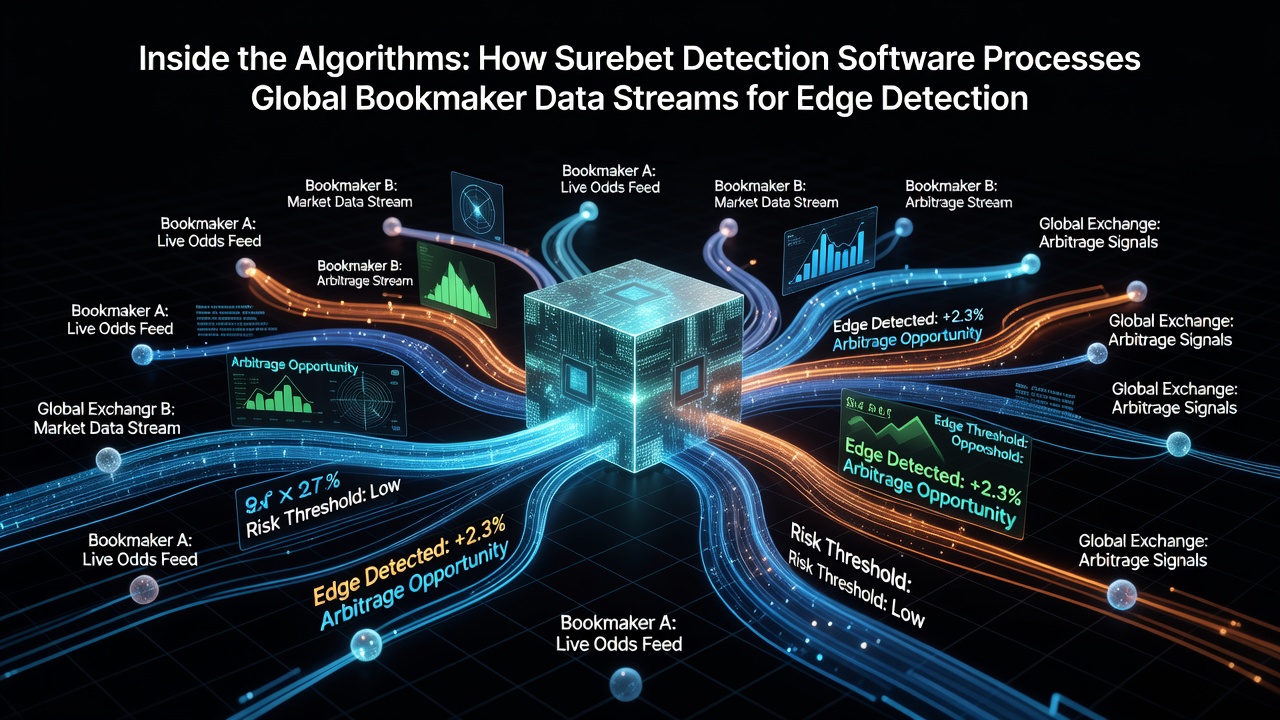
Software systems built to detect surebets pull continuous feeds from hundreds of bookmaker platforms worldwide, and these streams carry odds for thousands of events across dozens of sports at any given moment. The process begins with API connections that pull live prices, then moves through normalization layers that standardize formats before any calculation starts, while filtering mechanisms remove duplicates and stale entries that would otherwise clog the pipeline.
Data Ingestion and Initial Processing Layers
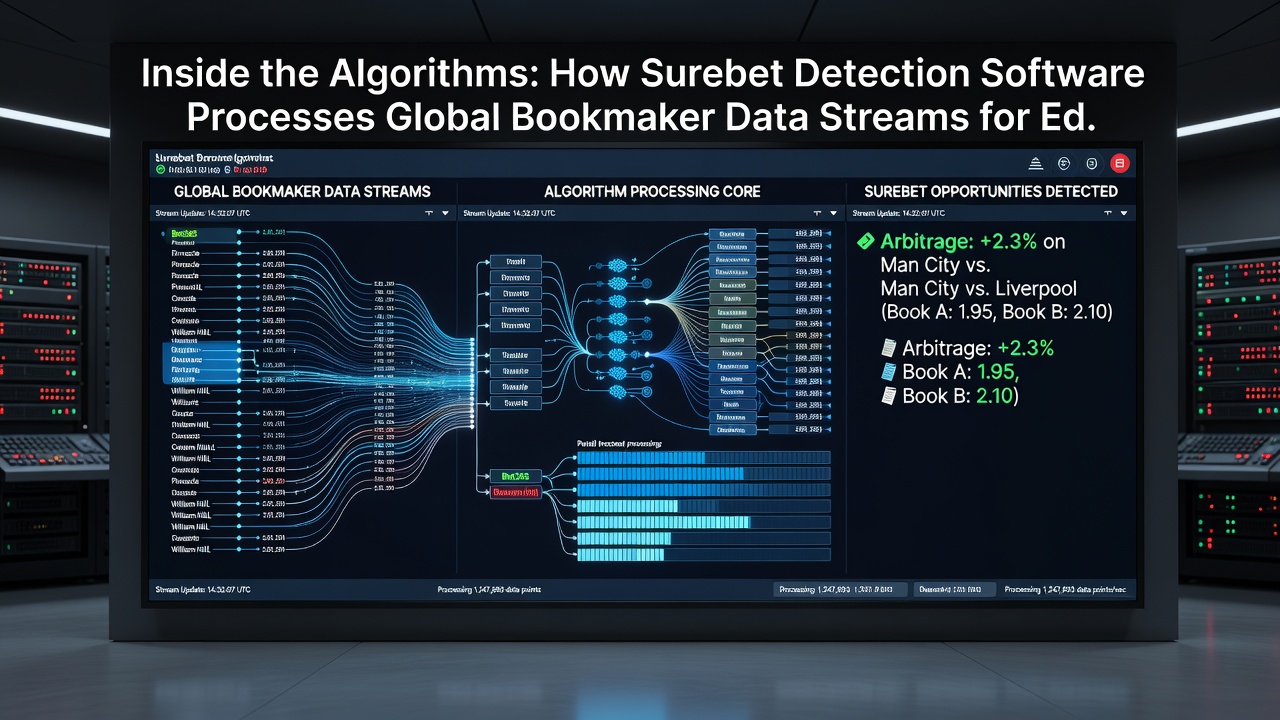
Engineers design ingestion modules to handle high-velocity inputs from sources that update every few seconds, and these modules rely on message queues such as Kafka or RabbitMQ to buffer incoming packets without dropping critical updates. Normalization routines convert each bookmaker’s proprietary format into a unified schema that includes event identifiers, market types, and decimal odds, after which validation checks confirm data integrity before the information reaches the core detection engine. In August 2026 observers noted that average daily ingest volumes for major scanners exceeded 12 million odds updates, a figure that reflects both expanded market coverage and faster refresh rates from newer bookmaker APIs.
Mathematical Models Behind Edge Identification
Once data reaches the analysis core, algorithms calculate implied probabilities for every outcome in a given market and compare those figures across all available bookmakers. The formula for identifying a surebet sums the reciprocals of the best available odds for each leg of a multi-outcome event, and any result below 1.0 signals a locked profit margin after accounting for stake allocation. Detection engines run these calculations in parallel across CPU clusters or GPU-accelerated nodes, while additional filters exclude opportunities that fall beneath minimum profit thresholds or exceed maximum stake limits imposed by individual operators. Researchers at institutions such as the American Gaming Association have documented how these parallel computations reduce detection latency from several seconds down to under 300 milliseconds on optimized systems.
Handling Latency, Regional Restrictions, and Data Gaps
Global networks introduce variable latency, so software incorporates timestamp synchronization that discards or flags entries older than a configurable window, usually set between two and five seconds. Geo-restriction handling becomes necessary because some jurisdictions block direct access to certain bookmaker APIs, prompting operators of detection platforms to maintain proxy servers in multiple regions that relay requests without violating local rules. When gaps appear in coverage for a particular event, the system either waits for the next update cycle or cross-references secondary data providers to maintain continuity, and this redundancy helps preserve accuracy during peak periods such as major tournaments.
Integration of Machine Learning for Pattern Recognition
Modern platforms supplement deterministic calculations with machine-learning models trained on historical odds movements, and these models predict which markets are likely to produce transient discrepancies before they close. Training datasets incorporate millions of past arbitrage instances along with features such as time of day, sport type, and bookmaker liquidity levels, allowing the system to assign probability scores that prioritize high-confidence alerts. The European Gaming and Betting Association reported in mid-2026 that operators integrating such hybrid approaches saw a measurable increase in the number of viable surebets surfaced per hour compared with purely rule-based predecessors.
Output Delivery and Continuous Refinement
After an edge is confirmed, the software packages the opportunity into user-facing alerts that include recommended stake splits calculated to equalize risk across all legs. Dashboards display real-time profit margins, while backend logs record every decision path so developers can audit false positives and adjust threshold parameters accordingly. Continuous refinement loops feed performance metrics back into both the rule engine and the machine-learning components, ensuring that seasonal shifts in betting patterns or new bookmaker entrants do not degrade detection quality over time.
Conclusion
The architecture supporting surebet detection therefore combines high-throughput data pipelines, precise mathematical verification, latency-aware filtering, and adaptive learning components that together transform raw global odds streams into actionable edge signals. As bookmaker platforms continue to evolve their API offerings and regulatory environments shift across regions, the underlying algorithms must maintain flexibility without sacrificing the speed and accuracy required for reliable identification of risk-free opportunities.