Live Market Discrepancies in Team Events: Structured Approaches to Edge Capture Across Betting Operators
Gisela Krause · Oct 14, 2026
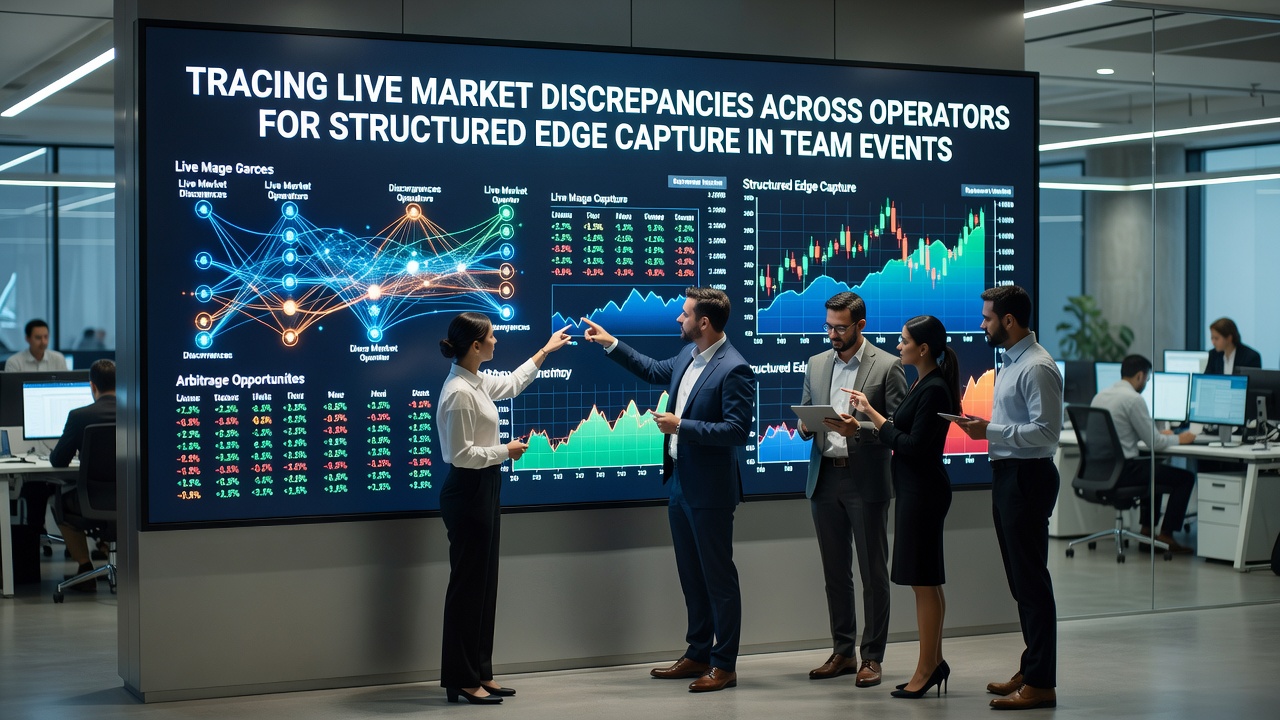
Live Market Discrepancies in Team Events: Structured Approaches to Edge Capture Across Betting Operators
Operators in the betting sector maintain distinct pricing models that create measurable differences in live odds for team events, and those variations become visible through systematic monitoring tools that track price movements across platforms in real time. Data from October 2026 shows increased volatility in multi-team competitions where rapid shifts in player availability and in-game momentum produce temporary gaps between bookmakers, allowing structured capture strategies to lock in returns when discrepancies align.
Team events introduce layered variables that single-player contests often lack, including collective substitutions, tactical adjustments, and cumulative fatigue factors that influence market pricing differently at each operator. Researchers at academic institutions have documented how these elements generate asynchronous updates, with some platforms adjusting lines within seconds while others lag by several minutes depending on their data feeds and risk protocols.
Identifying Discrepancies Through Real-Time Tracking
Specialized monitoring systems scan multiple operators simultaneously, comparing decimal or American odds formats for the same market segment such as match winner, total points, or handicap lines during ongoing competitions. When one operator prices a team at 1.85 while another lists the identical outcome at 1.92, the difference represents a window that scanners flag for potential structured positioning across accounts. Observers note that these gaps appear most frequently in the first half of events when initial line movements reflect early statistical inputs rather than settled game flow.
European regulatory filings indicate that cross-border operators employ varying liquidity thresholds, which directly affects how quickly they absorb incoming bets and recalibrate prices during live periods. One analysis from the University of Nevada, Las Vegas gaming research group found that operators with higher volume thresholds tend to maintain wider spreads longer, creating extended opportunities for alignment across lower-volume platforms that react faster to public money.
Structured Capture Methods in Practice
Teams monitoring these markets typically allocate positions proportionally to the size of each discrepancy, ensuring that combined stakes produce a fixed return regardless of the event outcome. Calculators integrated into scanner software compute the exact stake distribution needed to neutralize risk, factoring in operator-specific commission rates and currency conversion costs that can erode margins if overlooked. Data shows that successful alignments often occur in basketball and handball team matches where point differentials shift rapidly enough to trigger multiple operator responses within narrow timeframes.

Case examples from October 2026 monitoring sessions revealed instances where three separate operators priced the same over/under total differently after a key player substitution, allowing a coordinated stake sequence to capture the variance before lines converged. Industry reports from the Australian Gambling Research Centre highlight that such patterns recur in high-frequency team sports because collective player changes affect multiple statistical categories at once, amplifying the chance that pricing models diverge temporarily.
Technical Requirements and Data Integration
Effective tracing relies on API connections that pull live data feeds without delay, combined with historical volatility databases that help predict which markets are likely to produce usable gaps during specific game phases. Software platforms aggregate these feeds into unified interfaces where users can sort by discrepancy size, time remaining, and operator payout reliability. Those who have studied the process emphasize that consistent execution depends on maintaining verified accounts across jurisdictions with compatible settlement rules to avoid delays that could invalidate an otherwise aligned position.
Regulatory updates from the Malta Gaming Authority in late 2026 noted increased scrutiny on automated tools that interact with multiple licensed operators, requiring clearer disclosure of algorithmic trading activity to maintain market integrity standards. This environment has prompted scanner developers to incorporate compliance filters that exclude operators under temporary restrictions while still covering sufficient platforms to generate viable opportunities.
Conclusion
Market discrepancies across operators continue to supply structured edges in team event wagering when systematic tracing identifies and quantifies the gaps before they close. Evidence from regulatory filings and academic studies demonstrates that the frequency and size of these variations correlate with event pace and operator response times rather than random chance. Participants who integrate reliable data sources with precise calculation tools maintain the capacity to act on alignments as they emerge in October 2026 and beyond, provided they operate within the parameters set by each jurisdiction's licensing framework.