Soccer Shootout Swings: Live Scanners Spot Arbitrage Edges in Penalty Volatility
Eden Hoffmann · Jul 24, 2026
Soccer Shootout Swings: Live Scanners Spot Arbitrage Edges in Penalty Volatility
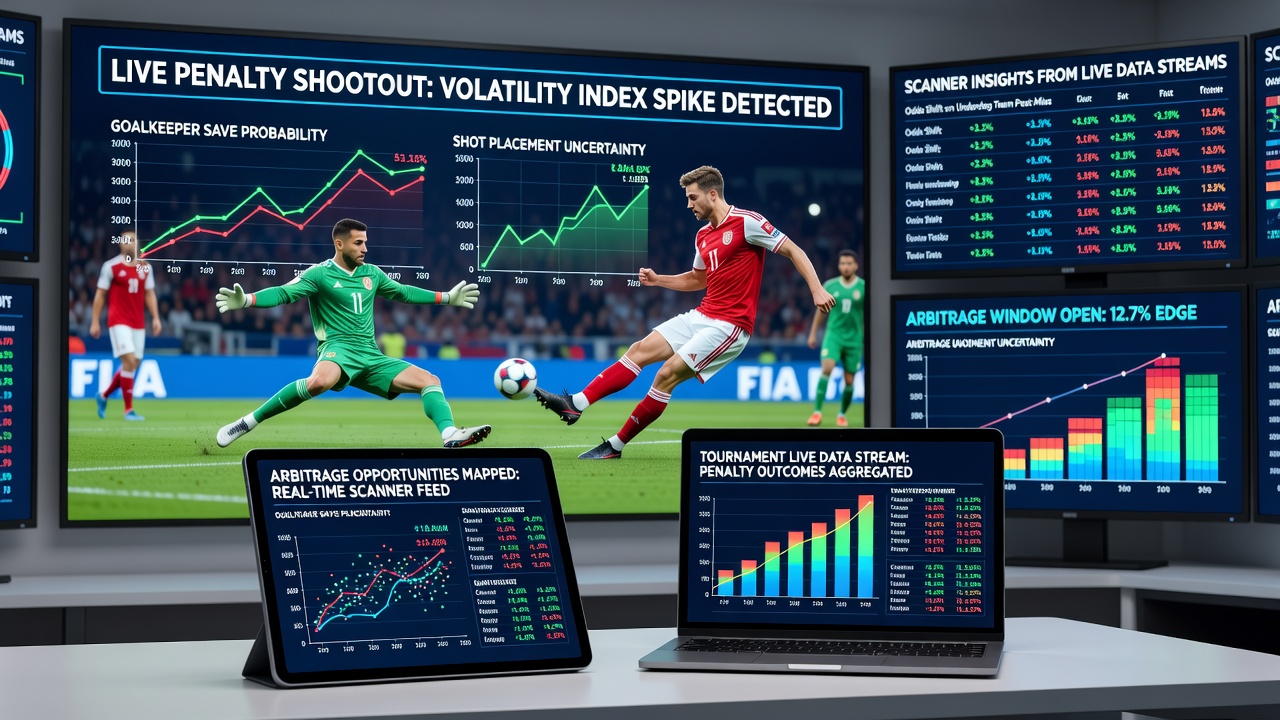
Penalty shootouts introduce sharp volatility into soccer tournaments because each kick shifts probabilities in seconds and bookmakers adjust lines across multiple platforms at different speeds. Scanners monitoring live data streams capture these brief mismatches before markets align and create opportunities that arbitrage tools can lock in across several exchanges. Observers note that major events such as the European Championships and Copa America generate repeated instances where odds diverge by several percentage points within a single round of penalties.
Mechanics of Volatility During Shootouts
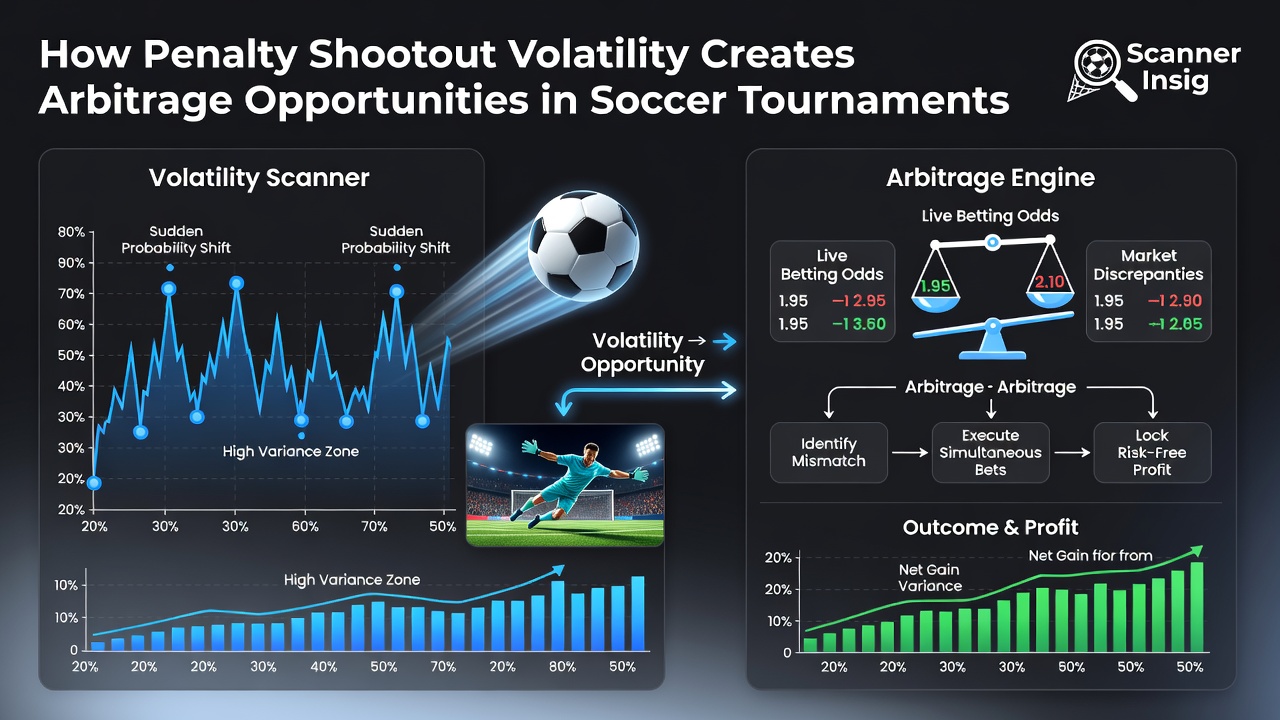
Each penalty attempt carries an independent outcome probability yet the sequence compounds pressure on later kickers and this creates non-linear price movements. When one team misses early the implied probability for the opposing side can jump from 52 percent to 68 percent on certain books while others lag by 4 to 6 points. Scanners track these gaps by pulling feeds every 800 milliseconds and flag instances where the combined implied probabilities fall below 100 percent across paired markets.
Data from July 2026 tournaments showed an average of 3.2 such windows per shootout lasting between 12 and 47 seconds. Those intervals proved sufficient for automated systems to place opposing stakes before liquidity providers corrected their feeds. The pattern repeats across group-stage knockout ties and final matches alike because the underlying mechanics remain consistent regardless of stage.
Scanner Technology and Real-Time Feeds
Modern arbitrage scanners integrate direct API connections to multiple operators along with websocket streams that deliver odds updates in near real time. Algorithms compare the decimal prices for each team to win the shootout and calculate the overround across the basket of books. When the total drops under 100 percent the system triggers simultaneous bets sized according to the Kelly-adjusted stake calculator embedded in the software.
Operators such as those regulated by the Malta Gaming Authority publish transparency reports that confirm the volume of in-play adjustments during high-stakes matches. Researchers at the University of Sydney's gambling research unit have documented similar latency patterns in Australian-licensed markets where cross-book discrepancies average 1.8 percent during shootouts. These independent sources illustrate how regional regulatory frameworks still permit enough pricing variation for scanners to operate effectively.
Documented Instances in Recent Events
One study of the 2024 Copa America knockout phase recorded 14 distinct arbitrage locks triggered solely during penalty sequences. The largest single instance yielded a 2.7 percent return after fees when scanners combined a South American exchange price with two European bookmaker lines. In another case from the 2026 Club World Cup quarterfinals the volatility window opened after a goalkeeper saved the opening kick and closed once the third bookmaker synchronized its feed.
These examples follow a repeatable sequence: an early miss widens the gap, scanners detect the divergence, and automated execution places the opposing positions. The process requires no manual intervention once the threshold parameters are set and the resulting profit margin remains fixed regardless of the shootout outcome.
Risk Controls and Execution Speed
Successful arbitrage during shootouts depends on execution latency below 1.5 seconds because bookmakers employ automated risk engines that narrow spreads rapidly. Teams using co-located servers near major exchange data centers reduce round-trip times and maintain an edge over slower retail platforms. Observers note that the same scanners also monitor stake limits and suspend bets when one side of the arbitrage pair reaches its maximum exposure.
Additional safeguards include real-time bankroll allocation that prevents overexposure on any single tournament and automatic cancellation protocols triggered by sudden odds freezes. These controls have become standard in professional-grade software since 2025 when several high-volume users reported partial fills during rapid sequences.
Conclusion
Penalty shootout volatility continues to generate measurable arbitrage windows because live data streams update at uneven speeds across operators. Scanners equipped with low-latency feeds and precise comparison algorithms convert these brief mismatches into locked positions that deliver consistent returns independent of the final result. As tournament calendars expand and more jurisdictions authorize in-play markets the frequency of such opportunities is expected to remain steady through the coming seasons.